

Before you reserve an off-plan apartment on the Kenya coast
Use this checklist before paying a reservation deposit on a coastal apartment.
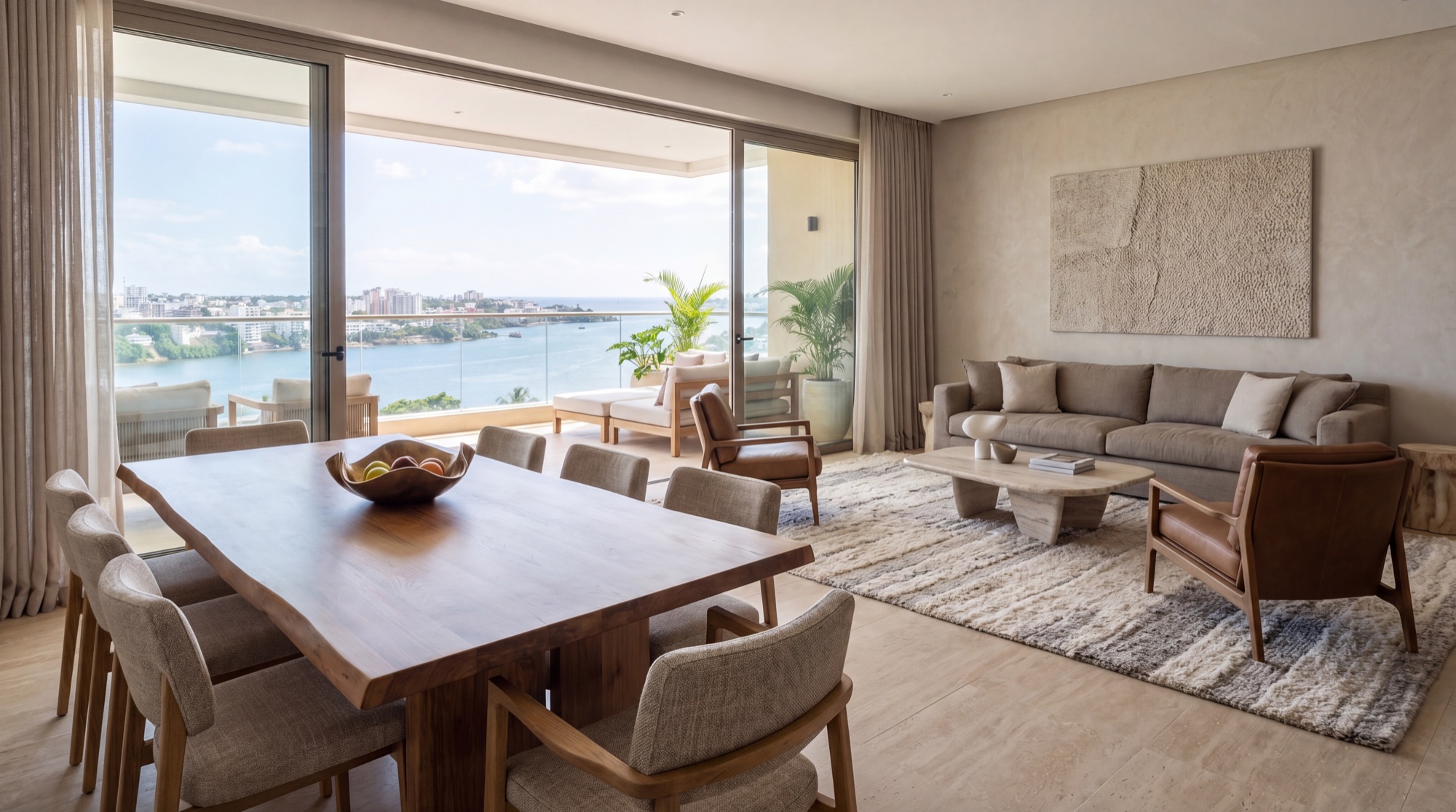
If you are considering an off-plan apartment on the Kenya coast, your first job is not to get excited by the render. It is to decide whether the project, timing, payment plan, and location fit your life well enough to justify a reservation.
Off-plan property can be a strong way to enter a market early, choose a better unit, and spread payments during construction. It also asks more of you as a buyer. You are buying into a plan, a team, a contract, and a delivery timeline before the finished home exists.
That does not make off-plan buying risky by default. It means the process has to be more disciplined. A finished apartment can be judged by walking through it. An off-plan apartment has to be judged by the strength of the site, the approvals, the delivery team, the payment structure, and the clarity of the buyer documents.
The first filter: does the location make sense?
Before reviewing the finishes or the render, ask whether the location supports your reason for buying. A short-let investor needs access, safety, guest appeal, and management practicality. A family buyer may care more about schools, parking, daily retail, road movement, and long-stay comfort. A future retirement buyer may value quiet, services, medical access, and long-term maintenance.
On the coast, two developments can be minutes apart but serve different buyers. A beach-led address, a city-adjacent apartment, and an inland serviced plot should not be compared as if they do the same job.
The buyer checklist
- Confirm the land, approvals, development plan, and project team.
- Ask for the unit schedule, payment plan, reservation terms, and refund window in writing.
- Compare the price against completed stock in the same area, not only other brochures.
- Understand what is included in the price: parking, finishes, service charge assumptions, and handover condition.
- Review the construction timeline and the milestone that triggers the next payment.
- Ask what happens if dates move, what notices buyers receive, and how progress will be communicated.
- Confirm who holds your reservation, what makes it binding, and what document follows next.
How to stress-test the decision
Run the numbers in three versions. The first is the optimistic version: strong demand, smooth payments, and the unit performing as planned. The second is the normal version: some delays, normal running costs, and realistic occupancy if you plan to rent. The third is the conservative version: slower rental take-up, higher furnishing costs, and a longer resale window than expected.
If the purchase only works in the optimistic version, slow down. If it still feels sensible in the normal and conservative versions, you are closer to a grounded decision.
What a good sales conversation should include
A good off-plan sales conversation should not pressure you into a unit before understanding your goal. It should help you compare options, explain the trade-offs, and clarify the documents. If you are considering Enclave’s newest apartment development, ask why one unit fits you better than another. That answer should include price, floor, view, use case, and the likely buyer profile for future resale.
Common mistakes to avoid
- Choosing only the lowest price without checking line, view, or resale audience.
- Assuming a render proves the final lived experience.
- Ignoring monthly cash flow after the reservation payment.
- Treating projected rental income as guaranteed.
- Failing to compare the apartment with other property types in the same budget range.
Enclave’s role is to make this comparison easier. For a buyer considering the current newest development, the first useful step is a unit shortlist with current prices, expected use case, and the trade-offs between floor, view, and size.